
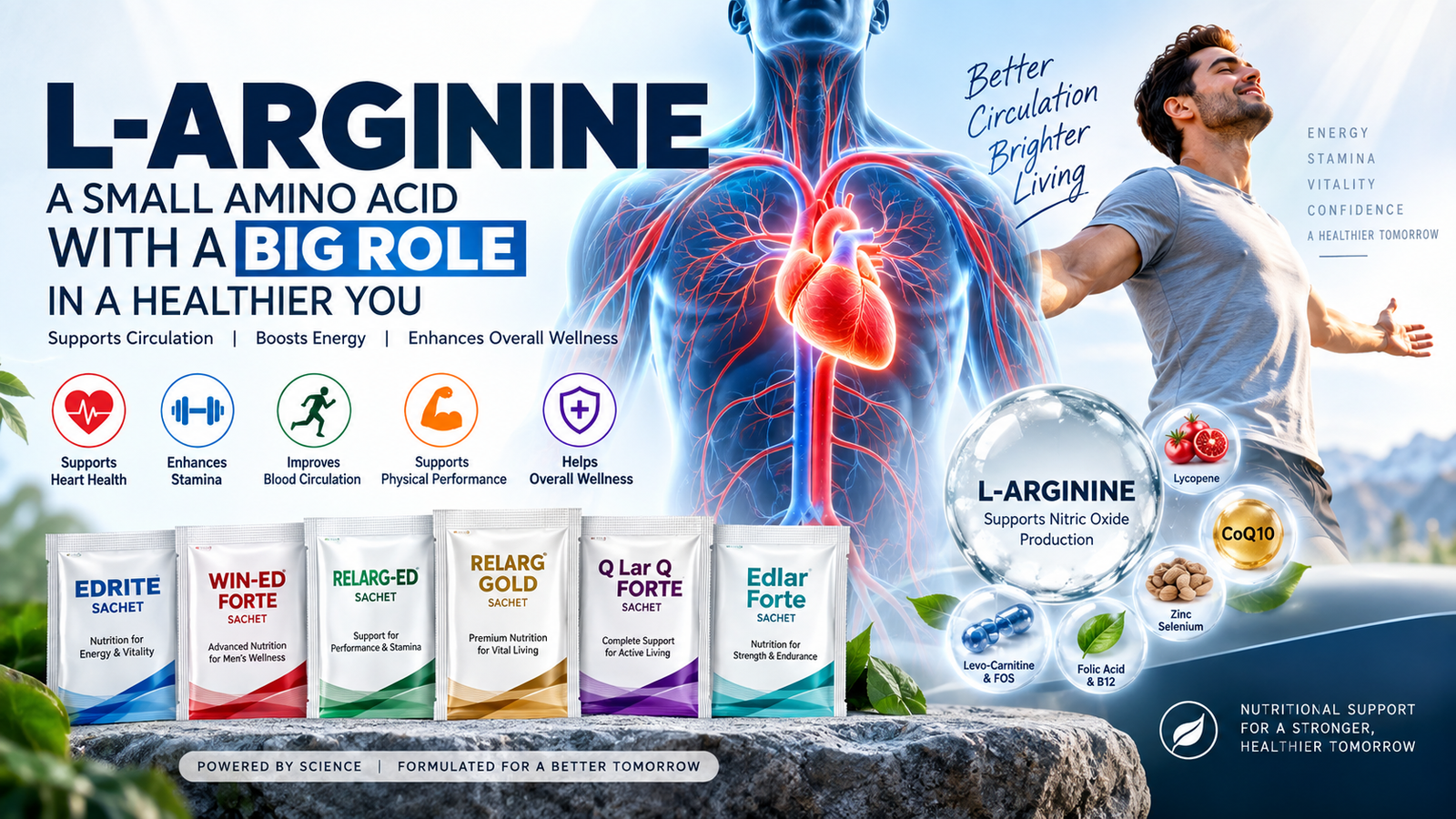
L-Arginine is an amino acid that plays an important role in several natural processes in the human body. It is involved in the production of nitric oxide, protein formation, blood circulation, and other important biological functions.
Because of its role in nitric oxide production and circulation, L-Arginine has become a popular ingredient in nutritional supplements, especially products designed to support energy, stamina, and overall wellness.
In this blog, we will understand the role of L-Arginine in the human body, its functions, dietary sources, and how L-Arginine sachets can fit into a balanced nutritional routine.
What Is L-Arginine?
L-Arginine is an amino acid naturally used by the body to make proteins and support various metabolic functions. The body can produce L-Arginine, and it can also be obtained through foods and nutritional supplements.
One of the most well-known functions of L-Arginine is its involvement in the production of nitric oxide (NO).
Nitric oxide helps blood vessels relax and widen, which is important for normal blood flow. This is one reason L-Arginine is commonly found in nutritional supplements focused on circulation, exercise performance, and general vitality.
What Is the Role of L-Arginine in the Human Body?
L-Arginine supports several important functions. Let’s understand them in simple language.
1. Supports Nitric Oxide Production
L-Arginine is a natural precursor to nitric oxide.
Nitric oxide acts as a signaling molecule in the body and helps blood vessels relax. Healthy nitric oxide production is therefore associated with normal vascular function and blood circulation.
This is one of the primary reasons L-Arginine is included in many nutritional formulations.
2. Helps Support Normal Blood Circulation
Good circulation is important because blood carries oxygen and nutrients throughout the body.
Since L-Arginine contributes to nitric oxide production, it may support normal blood vessel function and healthy circulation when used as part of an appropriate nutritional routine.
However, L-Arginine should not be considered a replacement for medical treatment for circulation-related conditions.
3. Supports Protein Formation
Like other amino acids, L-Arginine contributes to protein synthesis.
Proteins are essential building blocks of the human body and are involved in maintaining muscles, tissues, enzymes, hormones, and many other biological structures.
4. Important for Exercise and Physical Activity
L-Arginine is commonly used in sports and fitness nutrition because of its relationship with nitric oxide and blood flow.
Some people use L-Arginine supplements as part of their fitness routine to support exercise performance, stamina, and recovery. Individual responses can vary, and supplementation does not replace a balanced diet and proper training.
5. Supports the Body’s Natural Metabolic Processes
L-Arginine participates in several metabolic pathways. It is also involved in the urea cycle, a process through which the body helps convert ammonia into urea for elimination.
This makes L-Arginine an important amino acid in normal human metabolism.
6. Supports Overall Nutritional Wellness
L-Arginine works alongside other nutrients in the body. When included in a well-formulated nutritional supplement, it can be combined with vitamins, minerals, antioxidants, and other ingredients to provide broader nutritional support.
L-Arginine and Nitric Oxide: Why Are They Connected?
The relationship between L-Arginine and nitric oxide is one of the most discussed aspects of L-Arginine nutrition.
The body uses L-Arginine as a substrate to produce nitric oxide through nitric oxide synthase enzymes.
Nitric oxide helps regulate the relaxation of blood vessels. This process is known as vasodilation.
In simple terms:
L-Arginine → Nitric Oxide Production → Blood Vessel Relaxation → Support for Normal Blood Flow
This natural pathway is why L-Arginine is often included in products formulated for circulation, physical performance, and vitality.
Food Sources of L-Arginine
L-Arginine can be obtained naturally through different foods. Some common sources include:
- Nuts and seeds
- Peanuts
- Almonds
- Walnuts
- Pumpkin seeds
- Soybeans and other legumes
- Dairy products
- Fish
- Poultry
- Meat
- Whole grains
A varied and balanced diet can provide amino acids as part of normal nutrition.
For people looking for convenient supplementation, L-Arginine is also available in different supplement formats, including powders, tablets, capsules, and sachets.
L-Arginine Sachets: A Convenient Supplement Option
L-Arginine sachets are designed to provide a measured serving in a convenient format.
Different formulations may contain L-Arginine along with other nutritional ingredients. This can make them useful for people who prefer a ready-to-use supplement rather than individual tablets or capsules.
At our range, we offer several L-Arginine sachet formulations, including:
- EDRITE SACHET
- WIN-ED FORTE SACHET
- RELARG-ED SACHET
- RELARG GOLD SACHET
- Q Lar Q FORTE SACHET
- EDLAR FORTE SACHET
The exact formulation and ingredient combination may vary by product, so consumers should always check the individual product label before use.
Nutritional Information in Our L-Arginine Sachet Formulation
One of our L-Arginine sachet formulations provides the following approximate nutritional values per 10 g serving (1 sachet):
| Nutrient / Ingredient | Approx. Amount |
|---|---|
| Energy | 37 Kcal |
| Carbohydrate | 3.86 g |
| Fat | 0.0 g |
| L-Arginine | 3 g |
| Levo-Carnitine | 1.5 g |
| Fructo-Oligosaccharide | 1 g |
| Coenzyme Q10 | 100 mg |
| Citric Acid | 50 mg |
| Folic Acid | 500 mcg |
| Methylcobalamin | 2.5 mcg |
| Selenium | 50 mcg |
| Zinc | 10 mg |
| Lycopene | 2.5 mg |
This combination brings together L-Arginine with other nutrients commonly used in nutritional and wellness formulations.
Why Are Other Ingredients Combined With L-Arginine?
L-Arginine is often combined with complementary nutrients to create a more comprehensive formulation.
Levo-Carnitine
Levo-Carnitine is involved in the transportation of fatty acids into mitochondria, where they can be used in energy metabolism.
Coenzyme Q10
Coenzyme Q10 is naturally present in the body and plays a role in cellular energy production. It is also known for its antioxidant properties.
Zinc
Zinc is an essential mineral involved in numerous biological processes, including normal immune function, metabolism, and maintenance of various tissues.
Selenium
Selenium is an essential trace mineral that contributes to normal antioxidant protection and several important biological functions.
Folic Acid
Folic acid is a form of folate, a B vitamin needed for normal cell division and other biological processes.
Methylcobalamin
Methylcobalamin is a form of vitamin B12. Vitamin B12 contributes to normal energy metabolism, nervous system function, and red blood cell formation.
Lycopene
Lycopene is a naturally occurring carotenoid with antioxidant properties and is commonly found in tomatoes and other red fruits and vegetables.
Fructo-Oligosaccharide
Fructo-oligosaccharides (FOS) are a type of dietary carbohydrate that is commonly used in nutritional formulations as a prebiotic fiber.
L-Arginine and Men’s Wellness
L-Arginine is frequently discussed in men’s wellness because of its connection with nitric oxide and normal blood circulation.
Healthy circulation is an important part of overall physical function. However, it is important to understand that a nutritional supplement containing L-Arginine is not a guaranteed treatment for erectile dysfunction, sexual disorders, or any medical condition.
Men experiencing persistent sexual or health-related symptoms should speak with a qualified healthcare professional to identify the underlying cause.
Lifestyle factors such as regular physical activity, adequate sleep, balanced nutrition, maintaining a healthy weight, and avoiding tobacco can also contribute to overall cardiovascular and sexual wellness.
Who May Consider an L-Arginine Supplement?
L-Arginine supplements may be considered by adults who want to add L-Arginine to their nutritional routine, particularly when dietary intake is insufficient or when recommended by a healthcare professional.
However, supplementation is not necessary for everyone.
People with existing medical conditions, those taking medicines, pregnant or breastfeeding individuals, and anyone unsure about whether L-Arginine is appropriate should consult a healthcare professional before starting supplementation.
How to Choose an L-Arginine Sachet?
When choosing an L-Arginine supplement, don’t look only at the name or marketing claims. Check:
- L-Arginine quantity per serving
- Complete ingredient list
- Nutritional information
- Serving size and directions
- Manufacturer details
- Product quality and packaging
- Any applicable warnings or precautions
A transparent ingredient label helps you understand exactly what you are consuming.
Frequently Asked Questions About L-Arginine
What does L-Arginine do in the body?
L-Arginine is an amino acid involved in protein synthesis, the urea cycle, and nitric oxide production. Through nitric oxide, it contributes to normal blood vessel function and circulation.
Is L-Arginine naturally produced by the body?
Yes. The human body can produce L-Arginine, and it can also be obtained from foods and nutritional supplements.
Which foods contain L-Arginine?
Nuts, seeds, legumes, soybeans, fish, poultry, meat, dairy products, and whole grains can provide L-Arginine as part of a normal diet.
Are L-Arginine sachets useful?
L-Arginine sachets provide a convenient way to consume a measured amount of L-Arginine. Their suitability depends on individual nutritional needs, the product formulation, and overall health.
Can L-Arginine improve blood circulation?
L-Arginine is involved in nitric oxide production, which plays a role in blood vessel relaxation and normal vascular function. However, the effect of supplementation can vary between individuals and should not be considered a treatment for a circulation disorder.
Is L-Arginine a medicine?
L-Arginine is an amino acid and is commonly available as a nutritional supplement. A supplement should not be treated as a substitute for prescribed medical treatment.
Final Thoughts
L-Arginine is an important amino acid with several roles in the human body. Its best-known function is its involvement in nitric oxide production, which contributes to normal blood vessel relaxation and circulation.
It also participates in protein formation and normal metabolic processes. L-Arginine can be obtained from foods or consumed through nutritional supplements such as sachets.
Our L-Arginine sachet range includes EDRITE SACHET, WIN-ED FORTE SACHET, RELARG-ED SACHET, RELARG GOLD SACHET, Q Lar Q FORTE SACHET, and EDLAR FORTE SACHET. Some formulations combine L-Arginine with ingredients such as Levo-Carnitine, Coenzyme Q10, Zinc, Selenium, Folic Acid, Methylcobalamin, Lycopene, and Fructo-Oligosaccharide.
Before starting any supplement, read the product label carefully and consult a healthcare professional if you have an existing medical condition or take medications.
Choose nutrition wisely. Understand the ingredients. And make informed decisions about your wellness.